





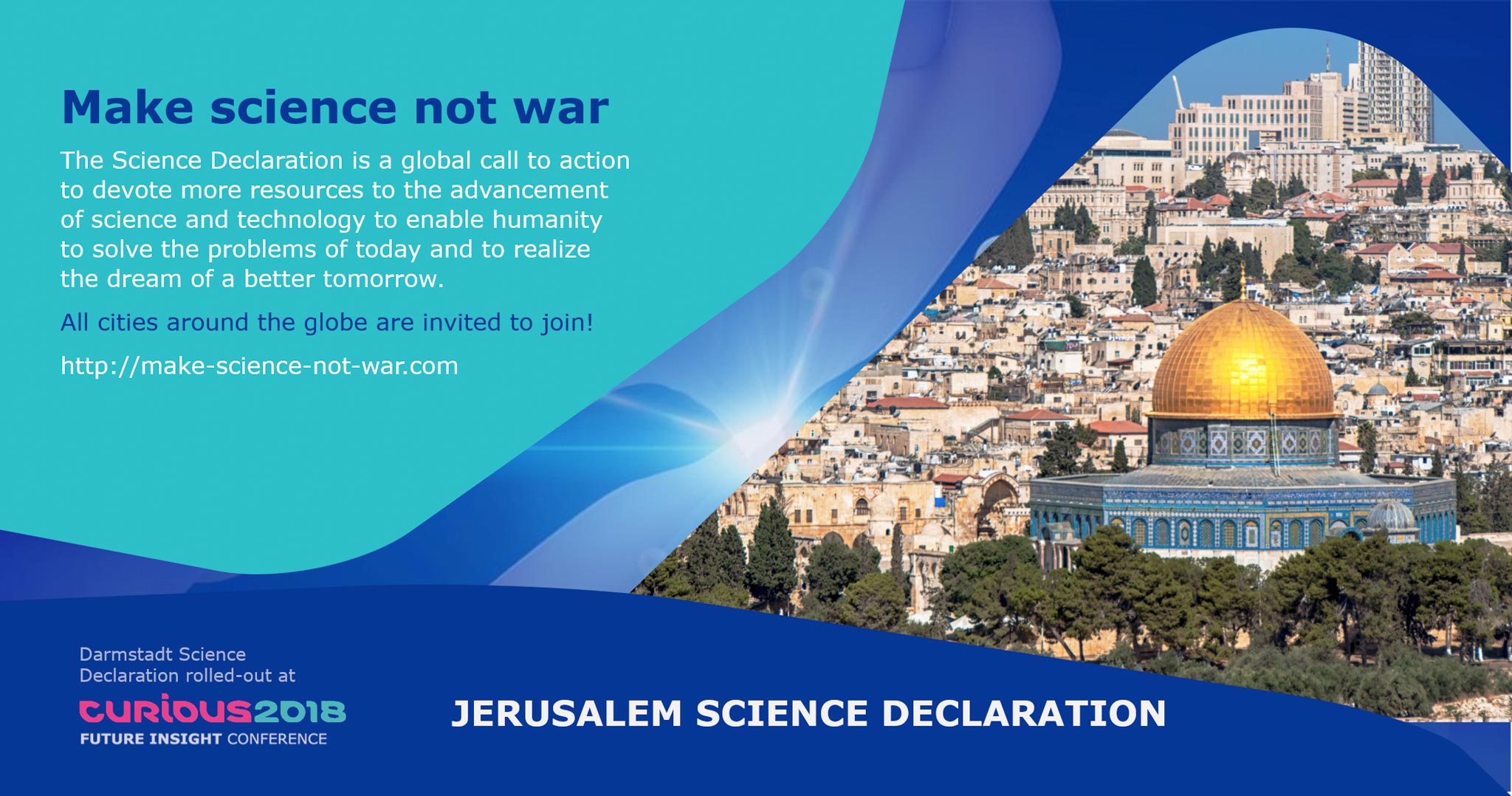


We, the signatories, are people of different national origins, creeds and convictions.
We all firmly believe that human progress is deeply linked to further advances in science and technology. We are truly convinced that science is a force for good which enables us to solve many of mankind’s most pressing challenges. We believe that huge opportunities will arise from future science and technology efforts. Yet we are also very well aware of the responsibility and accountability we bear for the new technologies that are realized.
We call on all nations, societies and organizations to devote more resources to the advancement of science and technology. We encourage the international community to join forces in battling debilitating diseases, ensuring sufficient food for a growing world population, stopping the destruction of our environment, and engaging in joint endeavors to elucidate the secrets this fascinating universe holds.
Nothing shall be impossible..
The goal is to collect 1 million signatures. The declaration with that support will then be widely published and brought to the attention of governments and relevant decision making bodies all over the world. The aim is to shape public opinion, to create a global movement resulting in a boost for research and development, in an increased attraction of bright young talents to science and technology and in general in an optimistic, utopian outlook to ensure the technologies required for a bright and sustainable future are made available in time.
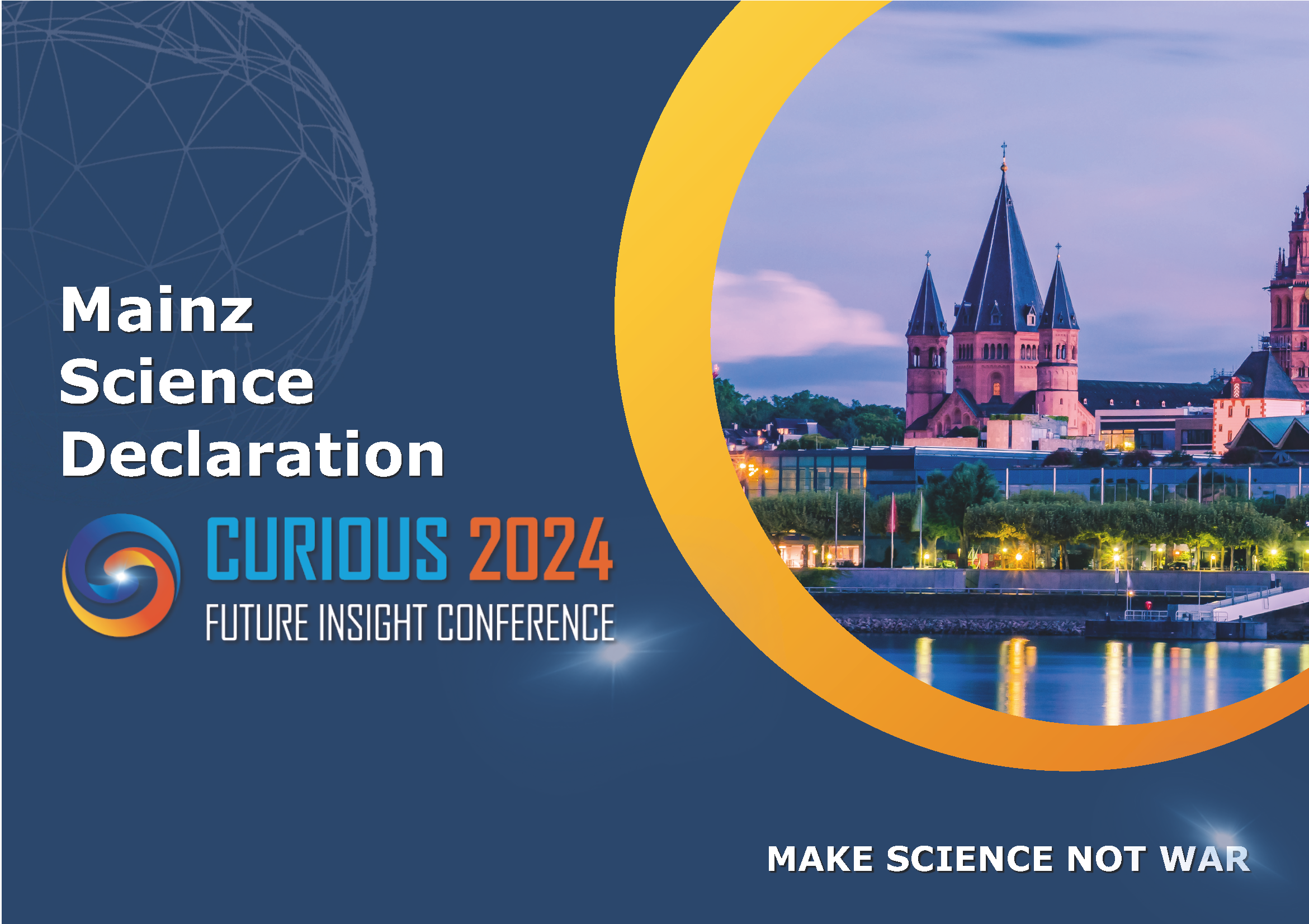
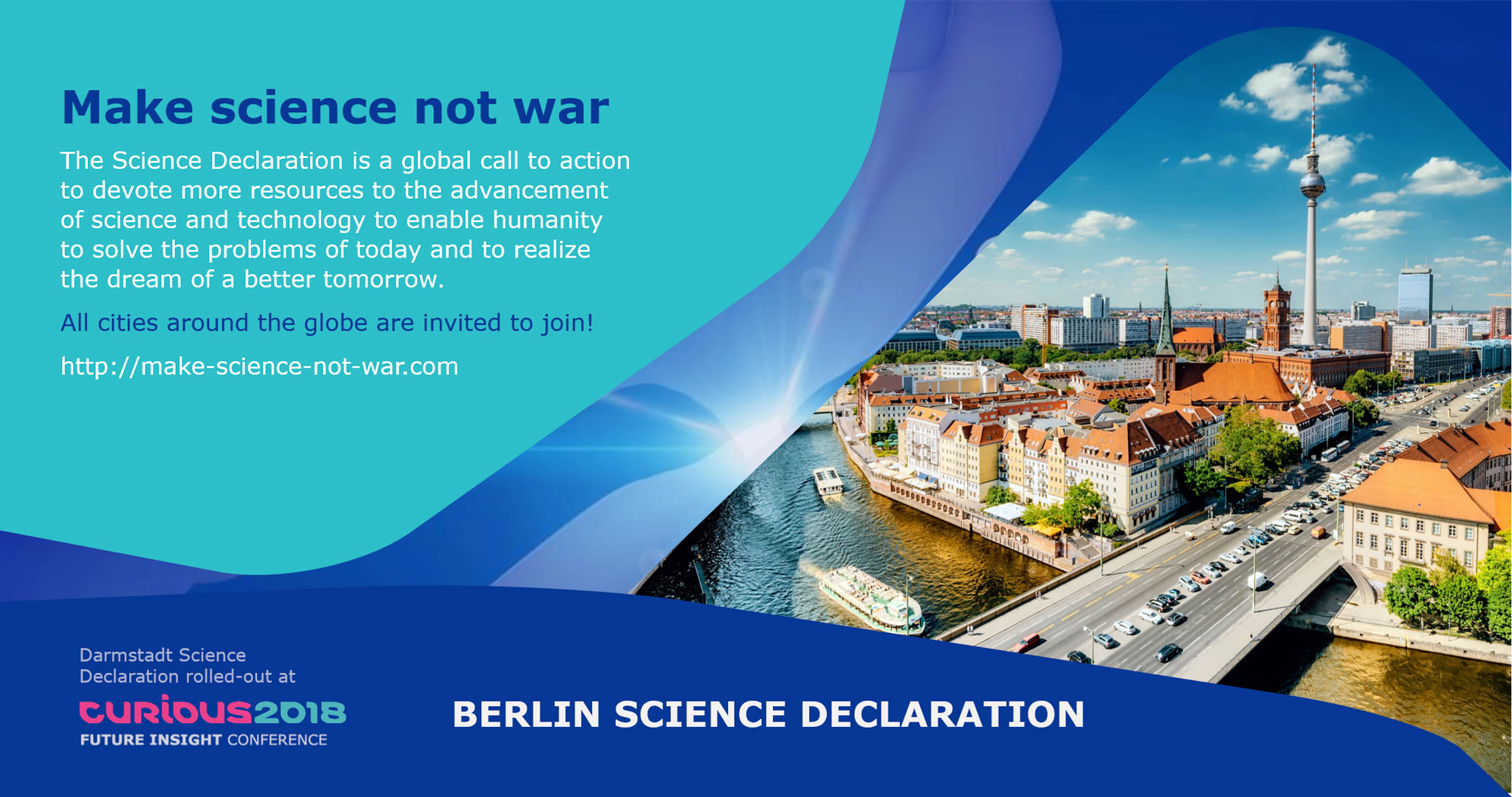
This declaration was rolled-out as Science Declaration during the Curious2018 – Future Insight™ Conference and is going around the world reaching all major cities.
Read about the Science Declaration in the AngewandteChemie.
Currently several thousand signatures – sign now!
The Science Declaration is a global call to action to devote more resources to the advancement of science & technology. This will enable humanity to solve the challenges of today and to realize the dreams of a better tomorrow. Everybody is cordially invited to sign this declaration now.
Conference Lead: Dr. Ulrich Betz, Chairman of the Board Future Insight e.V. and Senior Vice President Innovation, Merck KGaA, Darmstadt, Germany. Thank you for your interest in the Curious – Future Insight Conference. Feel free to get in touch if you have any questions about participation or partnerships.
“Future Insight” and “Curious – Future Insight” are protected trademarks.
Future Insight e.V. is committed to protecting and respecting your privacy, and we’ll only use your personal information to administer your account and to provide the products and services you requested from us. From time to time, we would like to contact you about our products and services, as well as other content that may be of interest to you. If you consent to us contacting you for this purpose vis e-mail, please fill out the fields below:
The Science Declaration is a global call to action to devote more resources to the advancement of science & technology. This will enable humanity to solve the challenges of today and to realize the dreams of a better tomorrow.
Privacy Note: By submitting this form, you agree that we use your personal data for the purpose of your participation in the petition and related activities (legal basis: Article 6 (1) a) GDPR). You can find further information on your rights below.
We use cookies so that we can offer you the best possible website experience. This includes cookies which are necessary for the operation of the app and the website, as well as other cookies which are used solely for anonymous statistical purposes, for more comfortable website settings, or for the display of personalized content. You are free to decide in the Cookie Settings which categories you would like to permit. Please note that depending on what you select, the full functionality of the website may no longer be available. You may review and change your choices at any time. Further information can be found in our Privacy Statement.